Support the Human Justice Fund.
From 2000–2020, over $100 million was spent surveilling, criminalizing, and incarcerating people in Bed-Stuy, Brownsville and East New York. With your investment, you can reverse this harm and repair our communities.
Let’s stop focusing on jails and start focusing on neighborhoods.
NuLegacy Neighborhoods is our desire for our communities — well-resourced, safe, and thriving places to live.
NuLegacy Neighborhoods are neighborhoods with several Million Dollar Blocks that deserve to be repaired and healed. The safest neighborhoods don’t have the most police; they have the most resources. NuLegacy Neighborhoods are built by divesting from mass incarceration and systems reform and instead investing directly in people, families, housing, land, cooperative businesses, and truthful and empowering education.
Million Dollar Blocks was coined by Eric Cadora and the Justice Mapping Center and informed by NuLeadership’s Seven Neighborhood Study. The research showed that criminalization, police brutality and surveillance, and mass incarceration targeted 7 specific neighborhoods in NYC and 3 in Brooklyn — East New York, Brownsville, and Bed-Stuy. These neighborhoods are overwhelmingly Black, Latinx, and low-income. The research also showed that NYC and NYS were spending millions of dollars incarcerating several residents from the same blocks in these neighborhoods. Mass incarceration destroyed entire communities by separating families, closing schools, and spending hundreds of millions of dollars on the prison industrial complex.
$100M
spent surveilling, criminalizing, and incarcerating people in Bed-Stuy, Brownsville and East New York.
From 2000 to 2020. Research informed by NuLeadership’s Seven Neighborhood Study showed the city and state spending millions incarcerating residents from the very same blocks. Each square is one million dollars.
The block is where it starts. The neighborhood is what we invest in.
For decades, public dollars have policed and incarcerated residents of the same blocks, while the human, institutional, economic and physical infrastructure of those neighborhoods stayed chronically underinvested. We flip that equation. The blocks that cost the most to incarcerate become the first places we build.
- Million Dollar BlocksIt cost $11,839,665 to incarcerate people from 11 blocks.
- Step 1: People’s Bail OutHousing, food, care and court support from day one home.
- Step 2: Guaranteed Income & StabilizationUnconditional income so families can stabilize and plan.
- Step 3: CommuniversityKnowledge and skills for community ownership and cooperative economics.
- Step 4: Community OwnershipHomes, land and businesses owned by the people of Brooklyn.
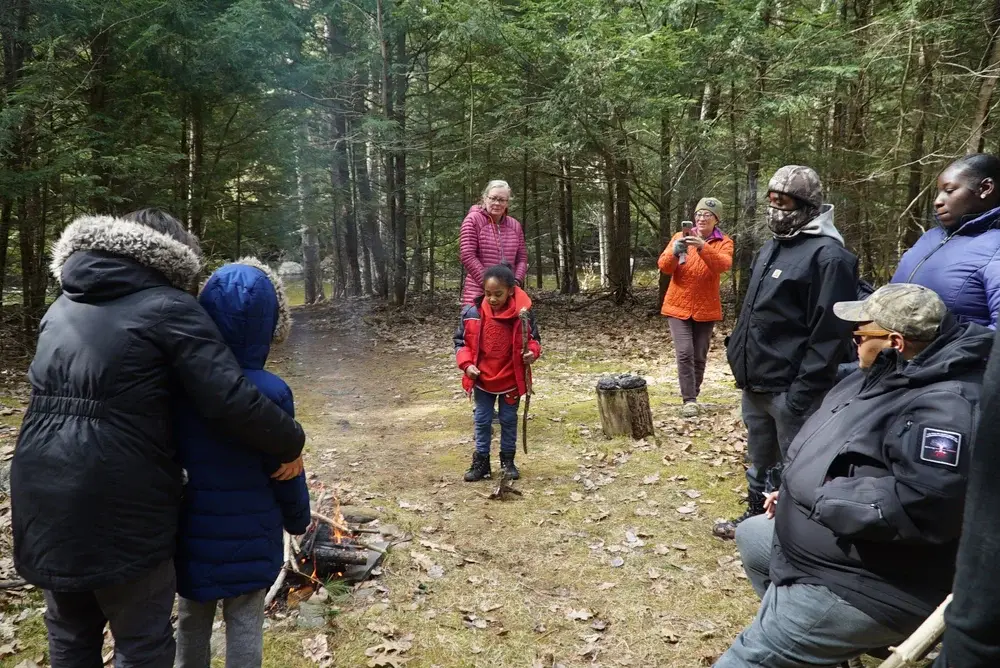
- Step 5: NuLegacy NeighborhoodsFarming, camping, healing, retreat and housing.
From financing incarceration to building the infrastructure of lasting safety.
People
Sustained income, education, healing and professional development for residents and the families, caregivers and neighbors around them.
Places
Homes repaired and preserved, trusted neighborhood institutions made permanent, and land held in common.
Pathways
Local businesses, cooperative ownership and paid work so residents shape and benefit from their own neighborhood economies.
- 50%+drop in subsequent annual earnings after incarceration
- 550×more likely to suffer chronic & mental illness when incarcerated after 55
- 10×more likely to experience homelessness
Six direct investments. Zero cages.
- Post-bail support
You can get people settled safely at home after release from Rikers.
Housing, food, care, and court support from day one.
We partner with bail projects that work with friends, family, and community to pay bail. Once people are free from jail, they come to us for post-bail support. Your gift will help people get settled into a secure place to live and have funds for immediate basic necessities including food, clothes, medical care (copays, prescriptions), transportation, rent, and court support to close and dismiss cases and begin healing from the impacts of incarceration.
- Guaranteed income
Your donation provides guaranteed income to formerly incarcerated people — this is reparations.
Incarceration cuts subsequent annual earnings by over 50%.
Research on guaranteed income shows that recipients have a much greater chance of securing full-time employment and improved health and well-being than those without guaranteed income. Guaranteed income provides people, families, and communities opportunities for unconstrained choices — something everyone, not just the rich, deserves.
When given funds with the freedom to spend as needed, guaranteed income recipients overwhelmingly spend on food, clothing, home goods, utilities, and car expenses. People with histories of incarceration suffer great losses in income — subsequent annual earnings reduced by over 50%. These losses entrench families and entire communities in lifelong poverty.
- Healthcare
Your donation pays for healthcare coverage and/or costs for formerly incarcerated people — this is life-saving.
Incarceration after 55 makes chronic and mental illness 550× more likely.
Research shows that incarceration results in significantly higher rates of chronic illness, infectious disease, substance abuse and mental illness and lower life expectancy — for incarcerated and formerly incarcerated individuals and their families. People who experience incarceration after 55 years old are 550 times more likely to suffer from chronic and mental illnesses.
The Medicaid exclusion policy means that once incarcerated, a person loses Medicaid coverage. Reinstatement is a complicated and long process. This disruption in care results in persistently low rates of health insurance coverage for formerly incarcerated people and continued worse health outcomes.
- Housing
Your donation supports rent payments and pathways to sustainable housing, because guaranteed housing ensures dignity, choice, and improved self-worth.
Formerly incarcerated people are 10× more likely to experience homelessness.
Formerly incarcerated people and their families are ten times more likely to experience homelessness. The revolving door between prisons and shelters is well documented and results in much higher rates of drug use, mental illness, and death.
Housing policy prevents people with incarceration histories from easily signing leases, accessing public housing (for themselves and their families), and obtaining mortgages. Discrimination by landlords, developers, and loan officers is rampant. Guaranteed housing programs have been shown to help participants secure long-term stable housing, improve health, secure long-term stable employment, and end homelessness in municipalities.
- Education
Your gift creates an inclusive, barrier-free, no-cost, empowering education space.
Community-led, community-created, community-curated.
From the school-to-prison pipeline to divestment from public education in poor, criminalized neighborhoods, to the race- and class-based tracking of students of color, to the invalidation of truthful history, the relationship between the education system and communities decimated by mass incarceration has been adversarial.
Communiversity uplifts the tremendous knowledge that exists in communities and invites community members to build and share their own courses, alongside courses taught by leading activists, organizers, academics, researchers, and public intellectuals. With basic needs met through guaranteed income, housing, and healthcare, participation has been rich, full, engaging, and extremely successful.
- Land & home ownership
Your donation supports pathways to land and homeownership.
Great strength in numbers — greater in cooperative ownership.
There are dozens of opportunities for land and home ownership — for people with capital. In the case of Million Dollar Blocks, gentrification has resulted in increased costs of living and owning and further displacement of long-term residents.
In order to own homes and land, our community ownership program is pooling resources, learning about ownership vehicles like Community Land Trusts, looking at converting HDFCs into co-ops, and building out our cooperatively owned land in upstate New York. There is great strength in numbers when it comes to ownership — and even greater strength in cooperative ownership.
Please give to the Human Justice Fund and join the shift from criminal justice to Human Justice.
Addressing mass incarceration by investing in communities is long overdue. Transforming Million Dollar Blocks into NuLegacy Neighborhoods will show how directing resources to improving communities will have better, more lasting impact than systems reforms.
Beginning with Brooklyn, we’ve acquired a community house that is also cooperatively owned and currently housing people in need of a safe place to live. There are ongoing renovation and maintenance costs that your contribution will help to cover.
Justice cannot be achieved if the starting point is criminal.
Give now